Also
AEO, AIO, GEO, SEO, BLA BLA BLA
SEO
AEO, AIO, GEO, SEO, BLA BLA BLA
SEO
AEO, AIO, GEO, SEO, BLA BLA BLA
SEO
resurrected.
Me, myself, and I
resurrected.
Me, myself, and I
resurrected.
Me, myself, and I
being a startupper
Me, myself, and I
being a startupper
Me, myself, and I
being a startupper
Me, myself, and I
People who come from SEO, buy. Is that true?
SEO
People who come from SEO, buy. Is that true?
SEO
People who come from SEO, buy. Is that true?
SEO
how to increase website traffic without losing your mind (or your budget)
how to increase website traffic without losing your mind (or your budget)
how to increase website traffic without losing your mind (or your budget)

SEO
SEO
5 min
5 min
so you want more traffic. same.
i know how to increase website traffic because i spent six months failing at it. my first blog died with 47 total visitors. forty-seven. i'd written what i thought were "brilliant" posts about productivity hacks and morning routines. nobody came. nobody cared. i'd done everything the gurus said — publish consistently, use keywords, share on social. BLA BLA BLA.
here's what actually happened. i was writing into the void. no distribution. no community. no understanding of what people actually searched for. i was just... talking to myself. loudly. with fancy headers.
the traffic trap most 'startuppers' fall into looks like this: you build the thing, you write the thing, you post the thing, then you refresh Google Analytics until you feel personally attacked by a flat line. you buy courses. you try "hacks." you maybe dump money into ads you don't understand. i've been there. i'm still there sometimes.
what this article actually covers (if you care): the what's and how's of getting people to your site without pretending to be a "thought leader" or using words like "synergy." real stuff from someone who failed publicly and kept notes.
the free stuff that actually moves the needle
SEO without the BLA BLA BLA
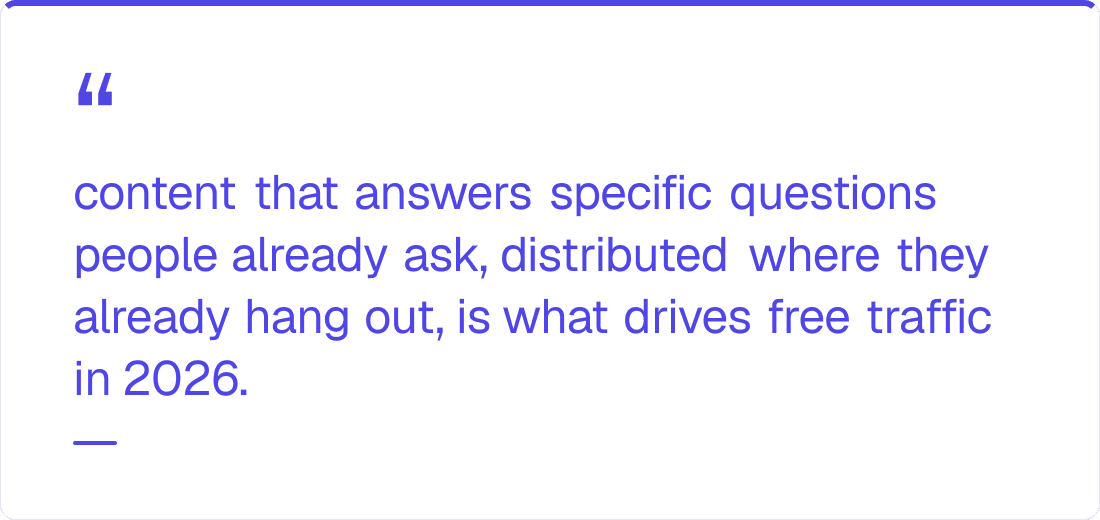
free traffic in 2026 comes from content that answers specific questions people already ask, distributed where they already hang out. not viral hacks. not hoping. just consistent, searchable, shareable stuff that solves real problems.
i used to think SEO meant stuffing keywords until my articles read like a robot had a stroke. then i learned about search intent. what is someone actually trying to do when they type something into Google? are they learning? buying? panicking? if your content doesn't match that intent, you won't rank. period.
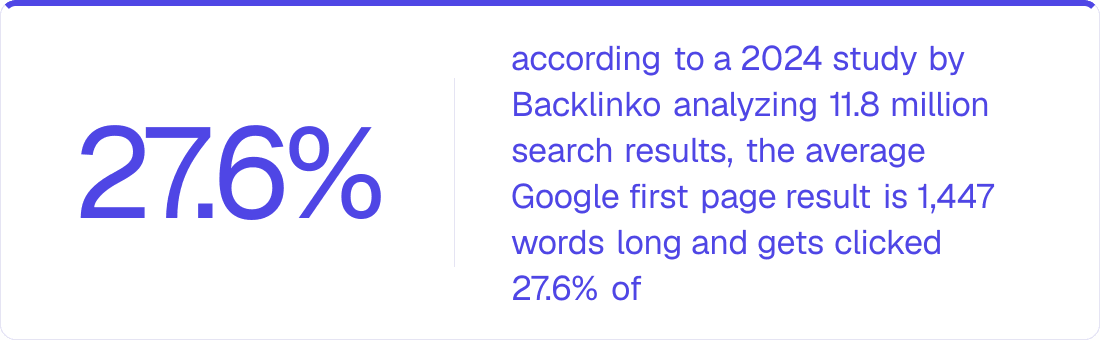
Google's Helpful Content guidance confirms this: their systems prioritize content that demonstrates first-hand expertise and satisfies the user's intent behind a query, not just keyword density. according to a 2024 study by Backlinko analyzing 11.8 million search results, the average Google first page result is 1,447 words long and gets clicked 27.6% of the time if it ranks #1. but here's the kicker — that click-through rate drops to 2.4% by position #10. being on page one isn't enough. you need to actually answer the thing.
my breakthrough came when i stopped writing "what is content marketing" and started writing "how to write an article that make people say 'oh my blog!'" — specific, weird, personal. that post still brings me organic traffic two years later.
the long-tail keyword trick that saved my second blog
long-tail keywords are how small sites win at how to increase website traffic without a budget. they're specific, lower-competition phrases that big brands ignore because the volume looks "too small." but ten phrases bringing 50 visitors each beats one impossible phrase bringing zero.
i found my first winner with a free tool — just typed my broad topic and looked for questions with low competition scores. "how to increase website traffic for free" had brutal competition. "how to increase website traffic for a B2B SaaS marketing blog with no budget" did not. guess which one i ranked for?
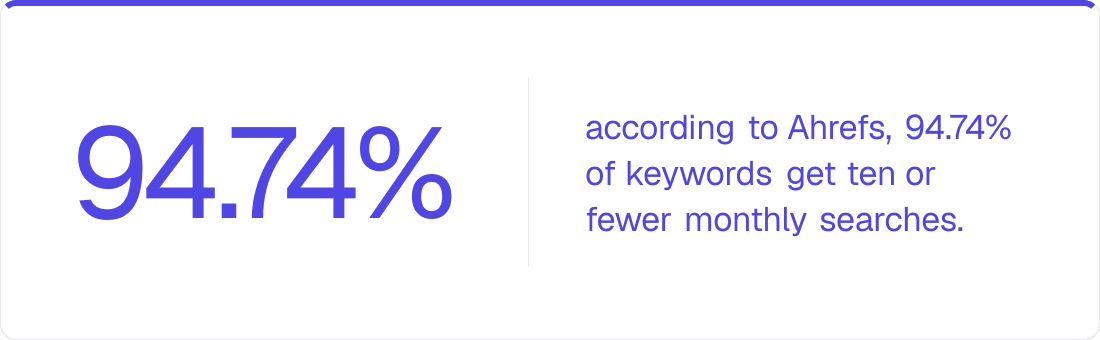
low-competition keywords are your friend if you're starting out. they let you get early wins while you build authority for harder terms. according to Ahrefs, 94.74% of keywords get ten or fewer monthly searches. that sounds depressing until you realize it means almost nobody's optimizing for them. the opportunity is hiding in the "too small to matter" pile.
i target phrases with search volume between 10-500 monthly searches and keyword difficulty under 20. that's my sweet spot. your mileage may vary. test it.
why I stopped 'leveraging' social media and started actually using it
social media is still worth it for website traffic, but only if you stop treating it like a billboard and start treating it like a conversation. LinkedIn and niche communities drive more B2B traffic than chasing TikTok virality ever will.
i used to schedule ten posts a day across five platforms. automated. soulless. zero engagement. then i tried something weird: i started commenting on other people's posts. like, actually reading them and saying something useful. i joined three niche Slack communities and answered questions without pitching. my website traffic from social tripled in two months. not because i was louder. because i was actually there.
content distribution matters more than content creation. you can write the best article in the world, but if nobody sees it, does it even exist? i learned this the hard way after publishing what i thought was my masterpiece. twelve views. eight were me checking for typos.
now i spend 40% of my time creating and 60% distributing. that ratio changed everything.
the dark side of traffic chasing
paid ads can drain your budget fast when you're learning how to increase website traffic. here's my $3,000 mistake.
paid ads can work. but when you don't know your ICP, don't understand your funnel, and don't have conversion tracking set up, you're just setting money on fire. i did this. it was warm and expensive.
i ran Facebook ads for a free guide. 3,000 clicks. zero email signups. turns out my landing page took eight seconds to load on mobile. turns out my "compelling" headline meant nothing to anyone but me. turns out i'd paid for 3,000 people to bounce immediately. the dark side of startup life is that nobody warns you about this part. they just show you the success stories.
when 'viral' content brought 40,000 visitors and zero sales
viral traffic is a sugar rush. feels amazing. means nothing if it's the wrong people. i had a tweet thread blow up — 40,000 visitors to my site in three days. my server crashed. my ego soared. my revenue stayed flat. not a single sale. not even an email signup worth nurturing.
what worked for me wasn't the viral moment. it was the boring, consistent stuff that attracted people who actually needed what i offered. 500 qualified visitors beats 40,000 random clicks. every time.
why I don't trust 'best practices' anymore
"best practices" killed my first blog. i followed every rule. my voice disappeared. my results stayed invisible. now i test everything myself. what actually happened when i tried this? that's my data. that's what i trust.
what's working now (from someone still figuring it out)
community-first content: my weird LinkedIn strategy
i stopped posting "tips" and started posting stories about what went wrong. my failed launches. my embarrassing metrics. the time i accidentally emailed my entire list with "TEST" as the subject line. (yes, really. 847 people saw that. three unsubscribed. one replied with "relatable.")
community marketing isn't about building a community around your brand. it's about joining communities that already exist and being genuinely useful. i comment on 10-15 posts daily in my niche. i share my articles only when they answer a specific question someone asked. i DM people who engage consistently and ask what they're working on. no pitch. just curiosity.
this strategy brought me more qualified traffic than any "content promotion" checklist i ever followed. according to a 2025 Edelman Trust Barometer report, 63% of people trust "someone like me" more than a CEO or brand spokesperson. being a real person in a comment section outperforms being a logo in a feed.
the email list as traffic insurance
traffic without a system to convert it is just a vanity number. i learned this after watching 10,000 monthly visitors do absolutely nothing for my business. they read. they left. they forgot i existed.
email list building changed the game. now when someone finds me through search or social, i offer them something specific — a mini-guide, a template, a stupidly honest case study. they join my list. i show up in their inbox weekly with something useful. when i publish something new, i have 4,000 people who actually want to know. that's traffic i own. Google can't take it away. Meta can't throttle it.
traffic conversion isn't about aggressive popups and countdown timers. it's about making an offer so relevant that opting in feels obvious. my best-performing lead magnet answers one question: "how do I manage property leads better?" i wrote it after three property managers told me that was their biggest pain point. sometimes the best content comes from just listening.
partnerships that don't feel like networking events
i've done the coffee chat circuit. the "let's explore synergies" calls. the dark side of forced networking is that everyone leaves feeling slightly dirty and nothing happens.
real partnerships look different. i found a founder whose product complements mine. we started mentioning each other in our newsletters. no contract. no tracking links. just genuine respect. his audience became my traffic. mine became his. it grew slowly. it stuck.
strategic partnerships work when both sides actually care about the other's success. not when you're calculating "what's in it for me" before the Zoom loads.
your 90-day traffic experiment
week 1-2: audit what you already have
typically 6-12 months for meaningful organic traffic, but you can get early signals in 8-12 weeks if you target low-competition keywords and actually promote your content.
before you create anything new, look at what exists. i found 23 old blog posts buried on my site. three were ranking on page two for decent terms with zero optimization. i updated them. added internal links. improved the headlines. within six weeks, two hit page one. free traffic from work i'd already done.
audit your existing content. check Search Console for impressions without clicks. those are your quickest wins.
week 3-8: publish and promote like a human
publishing into the void without distribution is the biggest mistake people make trying to get traffic. most people write, hit publish, and pray. traffic comes from promotion, relationships, and showing up where your audience already is.
my system now: publish one piece weekly. spend two hours promoting it — not spamming, but genuinely engaging where my people hang out. comment on five relevant posts. answer two questions in communities. send to my email list with personal context, not just "new blog post!"
i also started using social media for my business differently after reading how to use social media for your business. the shift from broadcasting to conversing was... uncomfortable at first. worth it.
week 9-12: double down or kill it
not everything works. i killed a newsletter format after twelve issues. decent open rates. zero replies. zero traffic to my site. it was a dead end. killing it freed up time for a podcast experiment that actually drove visits.
focus on searchable content, community participation, strategic partnerships, and email list building to get traffic without paid ads. it takes longer but compounds. paid ads stop working when you stop paying.
at week twelve, look at your data. what's moving? what's dead? kill the dead stuff without mercy. double down on what brings qualified visitors. this is how you build something that didn't break yet.
how to know if it's 'resurrected.' or just... alive
i reserve "resurrected." for moments that feel genuinely dramatic. my first blog hitting 1,000 monthly visitors after six months of nothing. my email list crossing 1,000 subscribers. the first month i made more from my content than my freelance work.
"alive" is quieter. consistent traffic. slow growth. signs that you're not shouting into nothing. both are worth celebrating. just know which one you're looking at so you don't panic prematurely.
oh my blog! let's wrap this up
qualified visitors, engagement time, and conversion to email signups matter more than raw pageviews. 1,000 right people beats 100,000 random clicks. this is the one metric i wish i tracked from day one: not traffic. relevance.
i spent two years chasing bigger numbers. bigger numbers didn't pay my rent. the right people did. the ones who found me through a specific search, stuck around to read, then joined my list because i actually helped them. that's the traffic that converts. that's the traffic that lasts.
what I'll try next (and probably fail at): YouTube. i'm terrified. i hate my voice on recordings. but video content drives serious traffic and AI engines are increasingly pulling from video transcripts. so... here goes. expect a "my first YouTube video was a disaster" post in a few months. if you care.
your move. pick one thing from this guide. not three. not five. one. do it for ninety days. track what happens. adjust. that's the whole secret. no guru required. no "scalable solution" needed. just you, showing up, figuring it out as you go.
if you want more of this — the failures, the weird wins, the "what actually happened" updates — there's a place for that.
Frequently Asked Questions
what actually works for free traffic in 2026?
content that answers specific questions people are already asking, distributed where they already hang out, drives free traffic. not viral hacks. not hoping. just consistent, searchable, shareable stuff that solves real problems. focus on search intent, long-tail keywords, and genuine community participation rather than chasing algorithm tricks.
how long until I see results from SEO?
typically 6-12 months for meaningful organic traffic, but early signals appear in 8-12 weeks with low-competition keywords and active promotion. i saw my first real traction at week ten after targeting specific phrases bigger sites ignored. patience plus promotion beats waiting alone.
is social media still worth it for website traffic?
yes, but only if you stop treating it like a billboard and start treating it like a conversation. LinkedIn and niche communities drive more B2B traffic than chasing TikTok virality ever will. my traffic tripled when i switched from scheduled broadcasting to genuine commenting and community participation.
what's the biggest mistake people make trying to get traffic?
publishing into the void without distribution. most people write, hit publish, and pray. traffic comes from promotion, relationships, and showing up where your audience already is. i wasted six months creating "great content" nobody saw because i never learned content distribution.
how do I get traffic without paid ads?
focus on searchable content, community participation, strategic partnerships, and email list building. it takes longer but compounds. paid ads stop working when you stop paying. my sustainable traffic now comes from organic search and owned channels, not from ad spend i can't maintain.
does AI-generated content help or hurt traffic?
it hurts if you publish generic AI slop. it helps if you use AI to speed up research and first drafts, then add real perspective, stories, and expertise no algorithm can fake. Google specifically rewards content demonstrating E-E-A-T — experience, expertise, authoritativeness, and trustworthiness. AI alone delivers none of that.
what metrics actually matter for traffic growth?
qualified visitors, engagement time, and conversion to email signups matter more than raw pageviews. 1,000 right people beats 100,000 random clicks. i track email subscribers per month, average engagement time on my top posts, and revenue attributed to organic search. everything else is vanity.
how do I turn traffic into something real?
capture emails immediately, nurture with valuable content, and make specific offers. traffic without a system to convert it is just a vanity number. my email list is now my primary business asset — more reliable than any platform algorithm and directly tied to revenue.
here's what the data says about traffic sources: organic search drives 53% of all website traffic on average (BrightEdge, 2024), while social media accounts for just 5% of traffic across industries. that gap is why i focus on searchable content first, social second. but the real kicker — email marketing generates $36 for every $1 spent, according to Litmus research. owned channels compound. rented channels disappear.
so you want more traffic. same.
i know how to increase website traffic because i spent six months failing at it. my first blog died with 47 total visitors. forty-seven. i'd written what i thought were "brilliant" posts about productivity hacks and morning routines. nobody came. nobody cared. i'd done everything the gurus said — publish consistently, use keywords, share on social. BLA BLA BLA.
here's what actually happened. i was writing into the void. no distribution. no community. no understanding of what people actually searched for. i was just... talking to myself. loudly. with fancy headers.
the traffic trap most 'startuppers' fall into looks like this: you build the thing, you write the thing, you post the thing, then you refresh Google Analytics until you feel personally attacked by a flat line. you buy courses. you try "hacks." you maybe dump money into ads you don't understand. i've been there. i'm still there sometimes.
what this article actually covers (if you care): the what's and how's of getting people to your site without pretending to be a "thought leader" or using words like "synergy." real stuff from someone who failed publicly and kept notes.
the free stuff that actually moves the needle
SEO without the BLA BLA BLA
free traffic in 2026 comes from content that answers specific questions people already ask, distributed where they already hang out. not viral hacks. not hoping. just consistent, searchable, shareable stuff that solves real problems.
i used to think SEO meant stuffing keywords until my articles read like a robot had a stroke. then i learned about search intent. what is someone actually trying to do when they type something into Google? are they learning? buying? panicking? if your content doesn't match that intent, you won't rank. period.
Google's Helpful Content guidance confirms this: their systems prioritize content that demonstrates first-hand expertise and satisfies the user's intent behind a query, not just keyword density. according to a 2024 study by Backlinko analyzing 11.8 million search results, the average Google first page result is 1,447 words long and gets clicked 27.6% of the time if it ranks #1. but here's the kicker — that click-through rate drops to 2.4% by position #10. being on page one isn't enough. you need to actually answer the thing.
my breakthrough came when i stopped writing "what is content marketing" and started writing "how to write an article that make people say 'oh my blog!'" — specific, weird, personal. that post still brings me organic traffic two years later.
the long-tail keyword trick that saved my second blog
long-tail keywords are how small sites win at how to increase website traffic without a budget. they're specific, lower-competition phrases that big brands ignore because the volume looks "too small." but ten phrases bringing 50 visitors each beats one impossible phrase bringing zero.
i found my first winner with a free tool — just typed my broad topic and looked for questions with low competition scores. "how to increase website traffic for free" had brutal competition. "how to increase website traffic for a B2B SaaS marketing blog with no budget" did not. guess which one i ranked for?
low-competition keywords are your friend if you're starting out. they let you get early wins while you build authority for harder terms. according to Ahrefs, 94.74% of keywords get ten or fewer monthly searches. that sounds depressing until you realize it means almost nobody's optimizing for them. the opportunity is hiding in the "too small to matter" pile.
i target phrases with search volume between 10-500 monthly searches and keyword difficulty under 20. that's my sweet spot. your mileage may vary. test it.
why I stopped 'leveraging' social media and started actually using it
social media is still worth it for website traffic, but only if you stop treating it like a billboard and start treating it like a conversation. LinkedIn and niche communities drive more B2B traffic than chasing TikTok virality ever will.
i used to schedule ten posts a day across five platforms. automated. soulless. zero engagement. then i tried something weird: i started commenting on other people's posts. like, actually reading them and saying something useful. i joined three niche Slack communities and answered questions without pitching. my website traffic from social tripled in two months. not because i was louder. because i was actually there.
content distribution matters more than content creation. you can write the best article in the world, but if nobody sees it, does it even exist? i learned this the hard way after publishing what i thought was my masterpiece. twelve views. eight were me checking for typos.
now i spend 40% of my time creating and 60% distributing. that ratio changed everything.
the dark side of traffic chasing
paid ads can drain your budget fast when you're learning how to increase website traffic. here's my $3,000 mistake.
paid ads can work. but when you don't know your ICP, don't understand your funnel, and don't have conversion tracking set up, you're just setting money on fire. i did this. it was warm and expensive.
i ran Facebook ads for a free guide. 3,000 clicks. zero email signups. turns out my landing page took eight seconds to load on mobile. turns out my "compelling" headline meant nothing to anyone but me. turns out i'd paid for 3,000 people to bounce immediately. the dark side of startup life is that nobody warns you about this part. they just show you the success stories.
when 'viral' content brought 40,000 visitors and zero sales
viral traffic is a sugar rush. feels amazing. means nothing if it's the wrong people. i had a tweet thread blow up — 40,000 visitors to my site in three days. my server crashed. my ego soared. my revenue stayed flat. not a single sale. not even an email signup worth nurturing.
what worked for me wasn't the viral moment. it was the boring, consistent stuff that attracted people who actually needed what i offered. 500 qualified visitors beats 40,000 random clicks. every time.
why I don't trust 'best practices' anymore
"best practices" killed my first blog. i followed every rule. my voice disappeared. my results stayed invisible. now i test everything myself. what actually happened when i tried this? that's my data. that's what i trust.
what's working now (from someone still figuring it out)
community-first content: my weird LinkedIn strategy
i stopped posting "tips" and started posting stories about what went wrong. my failed launches. my embarrassing metrics. the time i accidentally emailed my entire list with "TEST" as the subject line. (yes, really. 847 people saw that. three unsubscribed. one replied with "relatable.")
community marketing isn't about building a community around your brand. it's about joining communities that already exist and being genuinely useful. i comment on 10-15 posts daily in my niche. i share my articles only when they answer a specific question someone asked. i DM people who engage consistently and ask what they're working on. no pitch. just curiosity.
this strategy brought me more qualified traffic than any "content promotion" checklist i ever followed. according to a 2025 Edelman Trust Barometer report, 63% of people trust "someone like me" more than a CEO or brand spokesperson. being a real person in a comment section outperforms being a logo in a feed.
the email list as traffic insurance
traffic without a system to convert it is just a vanity number. i learned this after watching 10,000 monthly visitors do absolutely nothing for my business. they read. they left. they forgot i existed.
email list building changed the game. now when someone finds me through search or social, i offer them something specific — a mini-guide, a template, a stupidly honest case study. they join my list. i show up in their inbox weekly with something useful. when i publish something new, i have 4,000 people who actually want to know. that's traffic i own. Google can't take it away. Meta can't throttle it.
traffic conversion isn't about aggressive popups and countdown timers. it's about making an offer so relevant that opting in feels obvious. my best-performing lead magnet answers one question: "how do I manage property leads better?" i wrote it after three property managers told me that was their biggest pain point. sometimes the best content comes from just listening.
partnerships that don't feel like networking events
i've done the coffee chat circuit. the "let's explore synergies" calls. the dark side of forced networking is that everyone leaves feeling slightly dirty and nothing happens.
real partnerships look different. i found a founder whose product complements mine. we started mentioning each other in our newsletters. no contract. no tracking links. just genuine respect. his audience became my traffic. mine became his. it grew slowly. it stuck.
strategic partnerships work when both sides actually care about the other's success. not when you're calculating "what's in it for me" before the Zoom loads.
your 90-day traffic experiment
week 1-2: audit what you already have
typically 6-12 months for meaningful organic traffic, but you can get early signals in 8-12 weeks if you target low-competition keywords and actually promote your content.
before you create anything new, look at what exists. i found 23 old blog posts buried on my site. three were ranking on page two for decent terms with zero optimization. i updated them. added internal links. improved the headlines. within six weeks, two hit page one. free traffic from work i'd already done.
audit your existing content. check Search Console for impressions without clicks. those are your quickest wins.
week 3-8: publish and promote like a human
publishing into the void without distribution is the biggest mistake people make trying to get traffic. most people write, hit publish, and pray. traffic comes from promotion, relationships, and showing up where your audience already is.
my system now: publish one piece weekly. spend two hours promoting it — not spamming, but genuinely engaging where my people hang out. comment on five relevant posts. answer two questions in communities. send to my email list with personal context, not just "new blog post!"
i also started using social media for my business differently after reading how to use social media for your business. the shift from broadcasting to conversing was... uncomfortable at first. worth it.
week 9-12: double down or kill it
not everything works. i killed a newsletter format after twelve issues. decent open rates. zero replies. zero traffic to my site. it was a dead end. killing it freed up time for a podcast experiment that actually drove visits.
focus on searchable content, community participation, strategic partnerships, and email list building to get traffic without paid ads. it takes longer but compounds. paid ads stop working when you stop paying.
at week twelve, look at your data. what's moving? what's dead? kill the dead stuff without mercy. double down on what brings qualified visitors. this is how you build something that didn't break yet.
how to know if it's 'resurrected.' or just... alive
i reserve "resurrected." for moments that feel genuinely dramatic. my first blog hitting 1,000 monthly visitors after six months of nothing. my email list crossing 1,000 subscribers. the first month i made more from my content than my freelance work.
"alive" is quieter. consistent traffic. slow growth. signs that you're not shouting into nothing. both are worth celebrating. just know which one you're looking at so you don't panic prematurely.
oh my blog! let's wrap this up
qualified visitors, engagement time, and conversion to email signups matter more than raw pageviews. 1,000 right people beats 100,000 random clicks. this is the one metric i wish i tracked from day one: not traffic. relevance.
i spent two years chasing bigger numbers. bigger numbers didn't pay my rent. the right people did. the ones who found me through a specific search, stuck around to read, then joined my list because i actually helped them. that's the traffic that converts. that's the traffic that lasts.
what I'll try next (and probably fail at): YouTube. i'm terrified. i hate my voice on recordings. but video content drives serious traffic and AI engines are increasingly pulling from video transcripts. so... here goes. expect a "my first YouTube video was a disaster" post in a few months. if you care.
your move. pick one thing from this guide. not three. not five. one. do it for ninety days. track what happens. adjust. that's the whole secret. no guru required. no "scalable solution" needed. just you, showing up, figuring it out as you go.
if you want more of this — the failures, the weird wins, the "what actually happened" updates — there's a place for that.
Frequently Asked Questions
what actually works for free traffic in 2026?
content that answers specific questions people are already asking, distributed where they already hang out, drives free traffic. not viral hacks. not hoping. just consistent, searchable, shareable stuff that solves real problems. focus on search intent, long-tail keywords, and genuine community participation rather than chasing algorithm tricks.
how long until I see results from SEO?
typically 6-12 months for meaningful organic traffic, but early signals appear in 8-12 weeks with low-competition keywords and active promotion. i saw my first real traction at week ten after targeting specific phrases bigger sites ignored. patience plus promotion beats waiting alone.
is social media still worth it for website traffic?
yes, but only if you stop treating it like a billboard and start treating it like a conversation. LinkedIn and niche communities drive more B2B traffic than chasing TikTok virality ever will. my traffic tripled when i switched from scheduled broadcasting to genuine commenting and community participation.
what's the biggest mistake people make trying to get traffic?
publishing into the void without distribution. most people write, hit publish, and pray. traffic comes from promotion, relationships, and showing up where your audience already is. i wasted six months creating "great content" nobody saw because i never learned content distribution.
how do I get traffic without paid ads?
focus on searchable content, community participation, strategic partnerships, and email list building. it takes longer but compounds. paid ads stop working when you stop paying. my sustainable traffic now comes from organic search and owned channels, not from ad spend i can't maintain.
does AI-generated content help or hurt traffic?
it hurts if you publish generic AI slop. it helps if you use AI to speed up research and first drafts, then add real perspective, stories, and expertise no algorithm can fake. Google specifically rewards content demonstrating E-E-A-T — experience, expertise, authoritativeness, and trustworthiness. AI alone delivers none of that.
what metrics actually matter for traffic growth?
qualified visitors, engagement time, and conversion to email signups matter more than raw pageviews. 1,000 right people beats 100,000 random clicks. i track email subscribers per month, average engagement time on my top posts, and revenue attributed to organic search. everything else is vanity.
how do I turn traffic into something real?
capture emails immediately, nurture with valuable content, and make specific offers. traffic without a system to convert it is just a vanity number. my email list is now my primary business asset — more reliable than any platform algorithm and directly tied to revenue.
here's what the data says about traffic sources: organic search drives 53% of all website traffic on average (BrightEdge, 2024), while social media accounts for just 5% of traffic across industries. that gap is why i focus on searchable content first, social second. but the real kicker — email marketing generates $36 for every $1 spent, according to Litmus research. owned channels compound. rented channels disappear.
so you want more traffic. same.
i know how to increase website traffic because i spent six months failing at it. my first blog died with 47 total visitors. forty-seven. i'd written what i thought were "brilliant" posts about productivity hacks and morning routines. nobody came. nobody cared. i'd done everything the gurus said — publish consistently, use keywords, share on social. BLA BLA BLA.
here's what actually happened. i was writing into the void. no distribution. no community. no understanding of what people actually searched for. i was just... talking to myself. loudly. with fancy headers.
the traffic trap most 'startuppers' fall into looks like this: you build the thing, you write the thing, you post the thing, then you refresh Google Analytics until you feel personally attacked by a flat line. you buy courses. you try "hacks." you maybe dump money into ads you don't understand. i've been there. i'm still there sometimes.
what this article actually covers (if you care): the what's and how's of getting people to your site without pretending to be a "thought leader" or using words like "synergy." real stuff from someone who failed publicly and kept notes.
the free stuff that actually moves the needle
SEO without the BLA BLA BLA
free traffic in 2026 comes from content that answers specific questions people already ask, distributed where they already hang out. not viral hacks. not hoping. just consistent, searchable, shareable stuff that solves real problems.
i used to think SEO meant stuffing keywords until my articles read like a robot had a stroke. then i learned about search intent. what is someone actually trying to do when they type something into Google? are they learning? buying? panicking? if your content doesn't match that intent, you won't rank. period.
Google's Helpful Content guidance confirms this: their systems prioritize content that demonstrates first-hand expertise and satisfies the user's intent behind a query, not just keyword density. according to a 2024 study by Backlinko analyzing 11.8 million search results, the average Google first page result is 1,447 words long and gets clicked 27.6% of the time if it ranks #1. but here's the kicker — that click-through rate drops to 2.4% by position #10. being on page one isn't enough. you need to actually answer the thing.
my breakthrough came when i stopped writing "what is content marketing" and started writing "how to write an article that make people say 'oh my blog!'" — specific, weird, personal. that post still brings me organic traffic two years later.
the long-tail keyword trick that saved my second blog
long-tail keywords are how small sites win at how to increase website traffic without a budget. they're specific, lower-competition phrases that big brands ignore because the volume looks "too small." but ten phrases bringing 50 visitors each beats one impossible phrase bringing zero.
i found my first winner with a free tool — just typed my broad topic and looked for questions with low competition scores. "how to increase website traffic for free" had brutal competition. "how to increase website traffic for a B2B SaaS marketing blog with no budget" did not. guess which one i ranked for?
low-competition keywords are your friend if you're starting out. they let you get early wins while you build authority for harder terms. according to Ahrefs, 94.74% of keywords get ten or fewer monthly searches. that sounds depressing until you realize it means almost nobody's optimizing for them. the opportunity is hiding in the "too small to matter" pile.
i target phrases with search volume between 10-500 monthly searches and keyword difficulty under 20. that's my sweet spot. your mileage may vary. test it.
why I stopped 'leveraging' social media and started actually using it
social media is still worth it for website traffic, but only if you stop treating it like a billboard and start treating it like a conversation. LinkedIn and niche communities drive more B2B traffic than chasing TikTok virality ever will.
i used to schedule ten posts a day across five platforms. automated. soulless. zero engagement. then i tried something weird: i started commenting on other people's posts. like, actually reading them and saying something useful. i joined three niche Slack communities and answered questions without pitching. my website traffic from social tripled in two months. not because i was louder. because i was actually there.
content distribution matters more than content creation. you can write the best article in the world, but if nobody sees it, does it even exist? i learned this the hard way after publishing what i thought was my masterpiece. twelve views. eight were me checking for typos.
now i spend 40% of my time creating and 60% distributing. that ratio changed everything.
the dark side of traffic chasing
paid ads can drain your budget fast when you're learning how to increase website traffic. here's my $3,000 mistake.
paid ads can work. but when you don't know your ICP, don't understand your funnel, and don't have conversion tracking set up, you're just setting money on fire. i did this. it was warm and expensive.
i ran Facebook ads for a free guide. 3,000 clicks. zero email signups. turns out my landing page took eight seconds to load on mobile. turns out my "compelling" headline meant nothing to anyone but me. turns out i'd paid for 3,000 people to bounce immediately. the dark side of startup life is that nobody warns you about this part. they just show you the success stories.
when 'viral' content brought 40,000 visitors and zero sales
viral traffic is a sugar rush. feels amazing. means nothing if it's the wrong people. i had a tweet thread blow up — 40,000 visitors to my site in three days. my server crashed. my ego soared. my revenue stayed flat. not a single sale. not even an email signup worth nurturing.
what worked for me wasn't the viral moment. it was the boring, consistent stuff that attracted people who actually needed what i offered. 500 qualified visitors beats 40,000 random clicks. every time.
why I don't trust 'best practices' anymore
"best practices" killed my first blog. i followed every rule. my voice disappeared. my results stayed invisible. now i test everything myself. what actually happened when i tried this? that's my data. that's what i trust.
what's working now (from someone still figuring it out)
community-first content: my weird LinkedIn strategy
i stopped posting "tips" and started posting stories about what went wrong. my failed launches. my embarrassing metrics. the time i accidentally emailed my entire list with "TEST" as the subject line. (yes, really. 847 people saw that. three unsubscribed. one replied with "relatable.")
community marketing isn't about building a community around your brand. it's about joining communities that already exist and being genuinely useful. i comment on 10-15 posts daily in my niche. i share my articles only when they answer a specific question someone asked. i DM people who engage consistently and ask what they're working on. no pitch. just curiosity.
this strategy brought me more qualified traffic than any "content promotion" checklist i ever followed. according to a 2025 Edelman Trust Barometer report, 63% of people trust "someone like me" more than a CEO or brand spokesperson. being a real person in a comment section outperforms being a logo in a feed.
the email list as traffic insurance
traffic without a system to convert it is just a vanity number. i learned this after watching 10,000 monthly visitors do absolutely nothing for my business. they read. they left. they forgot i existed.
email list building changed the game. now when someone finds me through search or social, i offer them something specific — a mini-guide, a template, a stupidly honest case study. they join my list. i show up in their inbox weekly with something useful. when i publish something new, i have 4,000 people who actually want to know. that's traffic i own. Google can't take it away. Meta can't throttle it.
traffic conversion isn't about aggressive popups and countdown timers. it's about making an offer so relevant that opting in feels obvious. my best-performing lead magnet answers one question: "how do I manage property leads better?" i wrote it after three property managers told me that was their biggest pain point. sometimes the best content comes from just listening.
partnerships that don't feel like networking events
i've done the coffee chat circuit. the "let's explore synergies" calls. the dark side of forced networking is that everyone leaves feeling slightly dirty and nothing happens.
real partnerships look different. i found a founder whose product complements mine. we started mentioning each other in our newsletters. no contract. no tracking links. just genuine respect. his audience became my traffic. mine became his. it grew slowly. it stuck.
strategic partnerships work when both sides actually care about the other's success. not when you're calculating "what's in it for me" before the Zoom loads.
your 90-day traffic experiment
week 1-2: audit what you already have
typically 6-12 months for meaningful organic traffic, but you can get early signals in 8-12 weeks if you target low-competition keywords and actually promote your content.
before you create anything new, look at what exists. i found 23 old blog posts buried on my site. three were ranking on page two for decent terms with zero optimization. i updated them. added internal links. improved the headlines. within six weeks, two hit page one. free traffic from work i'd already done.
audit your existing content. check Search Console for impressions without clicks. those are your quickest wins.
week 3-8: publish and promote like a human
publishing into the void without distribution is the biggest mistake people make trying to get traffic. most people write, hit publish, and pray. traffic comes from promotion, relationships, and showing up where your audience already is.
my system now: publish one piece weekly. spend two hours promoting it — not spamming, but genuinely engaging where my people hang out. comment on five relevant posts. answer two questions in communities. send to my email list with personal context, not just "new blog post!"
i also started using social media for my business differently after reading how to use social media for your business. the shift from broadcasting to conversing was... uncomfortable at first. worth it.
week 9-12: double down or kill it
not everything works. i killed a newsletter format after twelve issues. decent open rates. zero replies. zero traffic to my site. it was a dead end. killing it freed up time for a podcast experiment that actually drove visits.
focus on searchable content, community participation, strategic partnerships, and email list building to get traffic without paid ads. it takes longer but compounds. paid ads stop working when you stop paying.
at week twelve, look at your data. what's moving? what's dead? kill the dead stuff without mercy. double down on what brings qualified visitors. this is how you build something that didn't break yet.
how to know if it's 'resurrected.' or just... alive
i reserve "resurrected." for moments that feel genuinely dramatic. my first blog hitting 1,000 monthly visitors after six months of nothing. my email list crossing 1,000 subscribers. the first month i made more from my content than my freelance work.
"alive" is quieter. consistent traffic. slow growth. signs that you're not shouting into nothing. both are worth celebrating. just know which one you're looking at so you don't panic prematurely.
oh my blog! let's wrap this up
qualified visitors, engagement time, and conversion to email signups matter more than raw pageviews. 1,000 right people beats 100,000 random clicks. this is the one metric i wish i tracked from day one: not traffic. relevance.
i spent two years chasing bigger numbers. bigger numbers didn't pay my rent. the right people did. the ones who found me through a specific search, stuck around to read, then joined my list because i actually helped them. that's the traffic that converts. that's the traffic that lasts.
what I'll try next (and probably fail at): YouTube. i'm terrified. i hate my voice on recordings. but video content drives serious traffic and AI engines are increasingly pulling from video transcripts. so... here goes. expect a "my first YouTube video was a disaster" post in a few months. if you care.
your move. pick one thing from this guide. not three. not five. one. do it for ninety days. track what happens. adjust. that's the whole secret. no guru required. no "scalable solution" needed. just you, showing up, figuring it out as you go.
if you want more of this — the failures, the weird wins, the "what actually happened" updates — there's a place for that.
Frequently Asked Questions
what actually works for free traffic in 2026?
content that answers specific questions people are already asking, distributed where they already hang out, drives free traffic. not viral hacks. not hoping. just consistent, searchable, shareable stuff that solves real problems. focus on search intent, long-tail keywords, and genuine community participation rather than chasing algorithm tricks.
how long until I see results from SEO?
typically 6-12 months for meaningful organic traffic, but early signals appear in 8-12 weeks with low-competition keywords and active promotion. i saw my first real traction at week ten after targeting specific phrases bigger sites ignored. patience plus promotion beats waiting alone.
is social media still worth it for website traffic?
yes, but only if you stop treating it like a billboard and start treating it like a conversation. LinkedIn and niche communities drive more B2B traffic than chasing TikTok virality ever will. my traffic tripled when i switched from scheduled broadcasting to genuine commenting and community participation.
what's the biggest mistake people make trying to get traffic?
publishing into the void without distribution. most people write, hit publish, and pray. traffic comes from promotion, relationships, and showing up where your audience already is. i wasted six months creating "great content" nobody saw because i never learned content distribution.
how do I get traffic without paid ads?
focus on searchable content, community participation, strategic partnerships, and email list building. it takes longer but compounds. paid ads stop working when you stop paying. my sustainable traffic now comes from organic search and owned channels, not from ad spend i can't maintain.
does AI-generated content help or hurt traffic?
it hurts if you publish generic AI slop. it helps if you use AI to speed up research and first drafts, then add real perspective, stories, and expertise no algorithm can fake. Google specifically rewards content demonstrating E-E-A-T — experience, expertise, authoritativeness, and trustworthiness. AI alone delivers none of that.
what metrics actually matter for traffic growth?
qualified visitors, engagement time, and conversion to email signups matter more than raw pageviews. 1,000 right people beats 100,000 random clicks. i track email subscribers per month, average engagement time on my top posts, and revenue attributed to organic search. everything else is vanity.
how do I turn traffic into something real?
capture emails immediately, nurture with valuable content, and make specific offers. traffic without a system to convert it is just a vanity number. my email list is now my primary business asset — more reliable than any platform algorithm and directly tied to revenue.
here's what the data says about traffic sources: organic search drives 53% of all website traffic on average (BrightEdge, 2024), while social media accounts for just 5% of traffic across industries. that gap is why i focus on searchable content first, social second. but the real kicker — email marketing generates $36 for every $1 spent, according to Litmus research. owned channels compound. rented channels disappear.